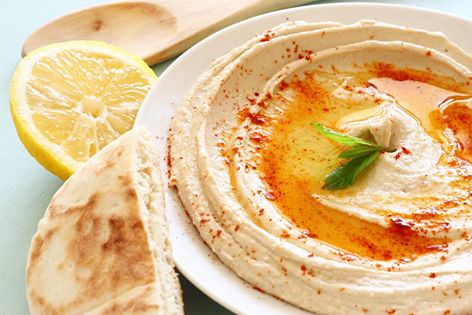
Hummus with tahini is one of the simplest and most delicious naturally vegan dishes in Arabic cooking. It is filling, built from legumes and tahini, and works for breakfast, dinner or mezze with bread and vegetables. Best of all, it is vegan by design—it does not need a “substitute” to be complete and delicious.
Ingredients
- 1 kg dried chickpeas, soaked from the previous day.
- Tahini to taste.
- Juice of 5 lemons.
- Salt to taste.
- 1 tsp baking soda.
- Olive oil for serving.
- Parsley and sumac for garnish.
How to make hummus with tahini
- Boil the chickpeas with the baking soda until they become very soft.
- Put some of the chickpeas in a blender, then add tahini, lemon juice and salt.
- Blend until smooth and creamy. If the mixture is too thick, add a little water gradually until you reach the consistency you like.
- Repeat with the remaining chickpeas.
- Transfer the hummus to a serving dish, add a little olive oil, then garnish with parsley and sumac.
- Serve with Arabic bread, fresh vegetables or salad.
Hummus with tahini: more than just protein
Chickpeas are legumes, so the protein comes packaged with fiber, folate, iron, potassium and relatively slow-digesting carbohydrates. Tahini adds unsaturated fats and nutrients from sesame. That is the strength of the “plant package”: we get protein without giving up the fiber that is absent from meat.
What do trials show? A recent systematic review and meta-analysis of 38 randomized trials on whole pulses found reductions in LDL and non-HDL cholesterol when pulses were included in the diet. Another review of 28 controlled studies found that chickpea consumption reduced post-meal blood-glucose rises compared with similar carbohydrate foods. This is more accurate—and stronger—than claiming hummus “treats” cholesterol or diabetes: the evidence supports a useful role for legumes within the diet, not a magic cure from one dish.
The stronger vegan question is replacement: when some animal protein is replaced with high-quality plant-protein sources such as legumes, soy and nuts, randomized trials show better LDL outcomes than red meat.
Sources: meta-analysis of pulse trials and blood lipids, review of chickpeas and post-meal blood glucose, and trials replacing red meat with plant protein.
If you are wondering where protein comes from in a vegan diet, also read our plant protein vs animal protein guide.
How can you serve it?
- With Arabic bread, cucumber, tomato and olives.
- Inside a sandwich with fresh vegetables.
- As a side dish with vegan lentil kebab.
- Use it as the base for vegan hummus fatteh.
- Serve it with taratour tahini sauce and grilled vegetables or a large salad.
Frequently asked questions
Can I use canned chickpeas?
Yes, if you want a faster version. Rinse them well, then blend with tahini, lemon and salt and adjust the texture with water.
How do I make hummus smoother?
Cook the chickpeas until they are very soft and blend thoroughly, adding water gradually. The softer the chickpeas, the easier it is to get a creamy texture.
Is hummus with tahini traditionally vegan?
Yes. The basic traditional recipe uses chickpeas, tahini, lemon, salt and oil—all plant ingredients.

If you already have tahini… make taratour too 🌱
A quick sauce for falafel, vegetables and salads. See the recipe here.