
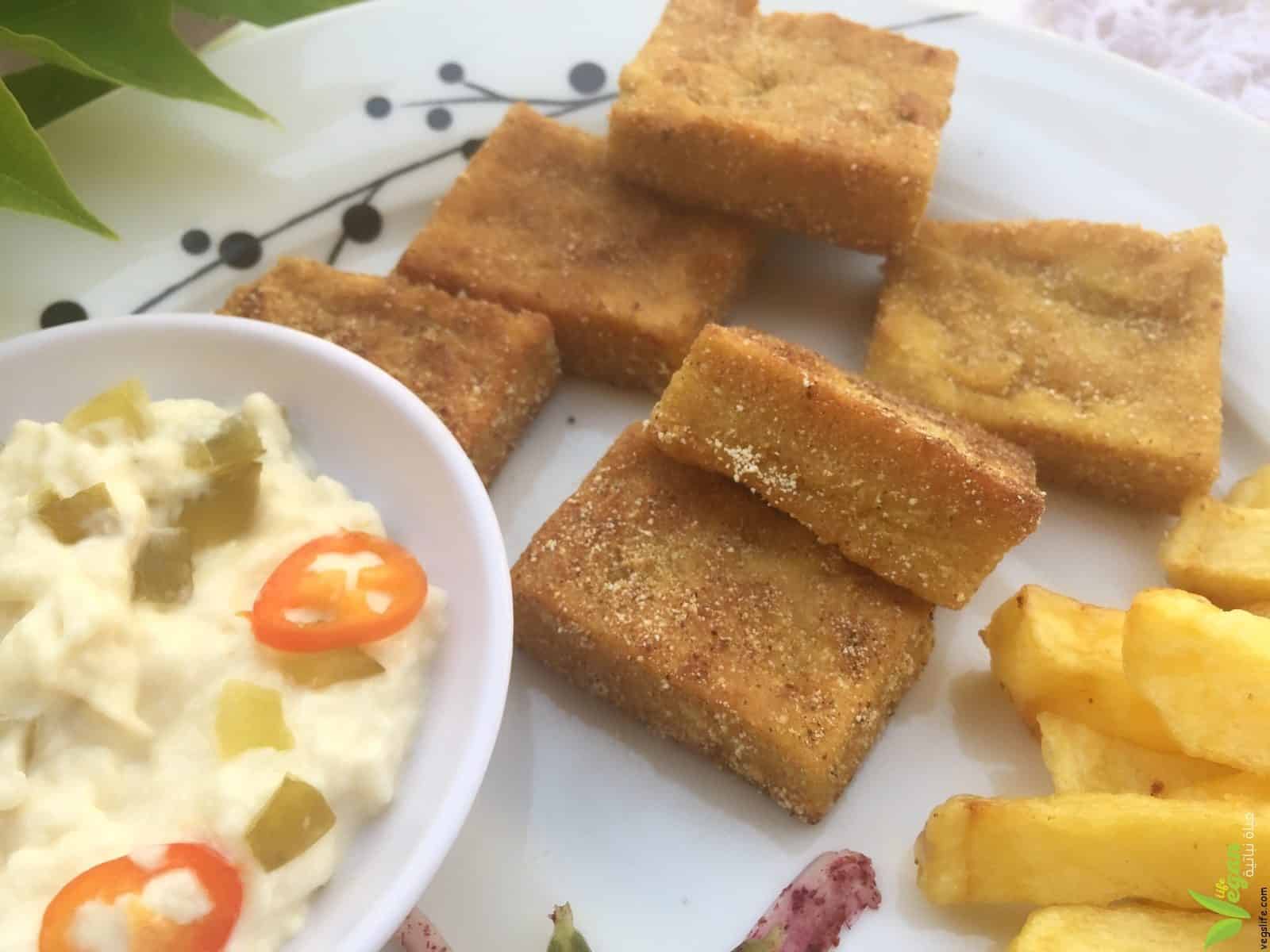
This is one of Veg’s Life’s more distinctive recipes: a firm “tofu” made from chickpea flour instead of soybeans. It sets firmly enough to cut into cubes or slices, then season and use with vegetables or in sandwiches. The original recipe uses vegetable broth and optional soy sauce for flavor, but you can also keep it neutral and season it later for different dishes.
Ingredients
- 1 cup chickpea flour
- 1 cup water for mixing with the chickpea flour
- 1 cup vegetable broth, or water with 1/2 vegetable stock cube, or water with 1/2 tsp salt
- 1 tsp soy sauce, optional
- 1/2 tsp turmeric
- A pinch of paprika
- A little oil for greasing the mold
How to Make Chickpea Tofu
- Bring 1 cup vegetable broth, or 1 cup water with half a vegetable stock cube, or 1 cup water with 1/2 teaspoon salt, to a boil.
- Meanwhile, mix the chickpea flour with 1 cup water, the optional soy sauce, turmeric and paprika. Stir very well so no lumps remain.
- When the liquid boils, slowly add the chickpea-flour mixture while stirring continuously to prevent lumps.
- Lower the heat and keep stirring until the mixture thickens, about four minutes as in the original recipe.
- Prepare a suitable glass container lightly greased with oil. Transfer the mixture into it quickly before it starts to set and smooth the surface with a spoon.
- Let it cool at room temperature, then refrigerate for about 1 hour until firm.
- Remove from the mold and cut into cubes or slices depending on how you want to use it.
Preparation Photos


After It Sets: How Can You Use It?


- Cut it into cubes and sauté it with vegetables.
- Slice it and use different seasonings depending on the dish.
- Use it in sandwiches or rice-and-vegetable dishes.
- Make it relatively neutral if you want to change the seasoning each time.
Chickpeas Have Measurable Effects on Blood Sugar and Cholesterol
Chickpeas give us more than protein: they also bring fiber, folate, iron and complex carbohydrates, and human trials have found lower post-meal glucose responses and lower LDL in chickpea-based diets.
In one randomized crossover trial, LDL was about 4.6% lower after a chickpea-supplemented diet than after a wheat-supplemented diet. Randomized meal trials have also found a lower glycemic response when chickpeas are eaten with a meal than with similar carbohydrate meals without them.
Replacement evidence makes the case even stronger: an analysis of 112 randomized trials found that replacing animal protein with plant protein reduced LDL, non-HDL cholesterol and ApoB. Chickpea tofu is therefore not just a visual meat substitute; it is a way to get protein together with fiber while improving some cardiovascular risk markers at the same time.
Sources: chickpeas and LDL, chickpeas and glycemic response, and replacing animal protein with plant protein.
For more on protein, see our plant vs animal protein guide. For iron, see our plant-based iron guide.
Frequently Asked Questions
Is this traditional tofu?
No. Traditional tofu is made from soybeans. This recipe uses chickpea flour and produces a firm texture suitable for many of the same uses, which is why it is commonly called “chickpea tofu.”
Can I make it without soy sauce?
Yes. Soy sauce is only for flavor and can be omitted.
How should I store it?
Keep it in a closed container in the refrigerator and use it within a short period, as you would any homemade cooked food.

Want more tofu recipes? 🌱
Compare it with our tofu made from soy milk, then try tofu shawarma or ravioli with tofu filling.


