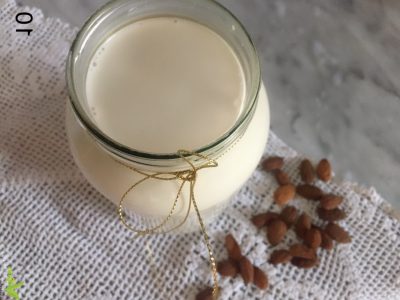
Homemade Almond Milk Ingredients
- 1 cup almonds, soaked in water for 6 hours (the original author peeled the almonds because she used the leftover pulp to make cheese)
- 3 cups water
- A suitable cloth for straining the milk
How to Make Homemade Almond Milk
The method is shown clearly in the numbered photos. Clean containers and a clean straining cloth are important.
Soak the almonds for 6 hours, then drain and rinse them.
Put the almonds in a blender with as much water as your blender can comfortably hold. Use only what you need at first and add the rest of the 3 cups later. Blend very well until the almonds are finely ground.
Place a suitable cloth in a strainer over a bowl.
Squeeze thoroughly to extract the milk. You can strain and squeeze in two stages. If any of the 3 cups of water remain, add them as you finish.
You now have almond milk. Use the leftover almond pulp in baking or kibbeh, or turn it into almond and rice labneh or vegan almond mozzarella.
Drink the milk plain, with cocoa or coffee, sweetened with dates or another sweetener, or use it in vegan almond-milk custard and vegan almond yogurt.
Enjoy.


What Does Almond Milk Actually Give Us?
The first clear advantage: almond milk is plant-based, lactose-free and contains no dietary cholesterol. There is no need for cow’s milk to make coffee, custard or other milk-based recipes.
But it is important to distinguish between whole almonds and strained homemade almond milk. Almonds themselves have strong evidence behind them: a recent meta-analysis of 36 randomized studies found reductions in LDL, total cholesterol, non-HDL cholesterol and ApoB with almond consumption. Source.
In this recipe, however, much of the almond pulp is strained out, so we should not automatically assume the finished drink is “high in protein, calcium, iron and fiber” in the same way whole almonds are. Reviews of plant-based milk alternatives show large differences in protein and calcium between products, and fortification matters especially when the drink is meant to be a major source of calcium, B12 or vitamin D. Recent review of plant-based milk alternatives.
If you want a delicious milk for drinking and cooking, this is a simple homemade option. If you want a daily drink you rely on nutritionally, choose a fortified plant milk and read the label; fortified soy milk is usually stronger for protein.
We also do not need to claim that almond milk “prevents cancer,” “causes weight loss,” or “fights wrinkles.” Veganism does not need magical promises to make a strong case.

Turn it into our almond-and-rice labneh. See the recipe here.